© RRjr
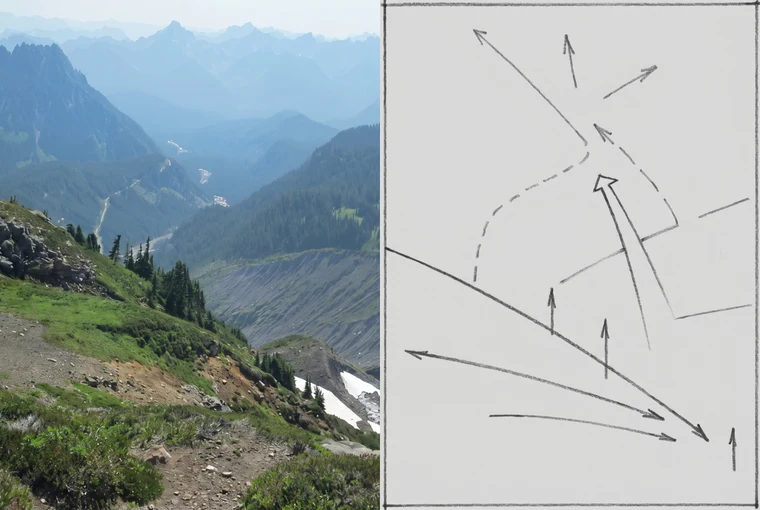
A rough map from the session. Without a path, the eye has nowhere to go and leaves. With one, it enters, moves, pauses, and comes back to start again. Everything that follows is just different ways to draw that line.
A Visual Companion
Every photograph is a compression. You take an experience that was wide and layered, the wind, the light, the sound, the feeling of standing there, and you flatten all of it into a single frame. The viewer wasn't with you. That frame is the only thing you get to hand them.
So the real question is how you move them through it. A still image doesn't have to be taken in all at once. A well made photograph has duration. The eye starts somewhere, travels, pauses, and arrives, and if you've done the work, that journey is where the feeling lives.
A weak composition shows things. A strong composition leads seeing. That's the whole difference. Without a path the viewer glances, registers a subject, and moves on. With one, that same subject becomes an event, something they get to discover on their own, even though you arranged it.
I borrow the word from music. Composition is orchestration, the choreography of attention. You're not arranging objects, you're activating the viewer. The viewer should feel invited in, guided but not shoved, given pauses and destinations, and above all rewarded for lingering.
This guide follows the ways a path actually gets built in a picture: line and diagonal, light and tone, repetition and rhythm. None of them are rules. They're the questions I ask of my own work, and the ones I want you asking of yours.
© RRjr
A rough map from the session. Without a path, the eye has nowhere to go and leaves. With one, it enters, moves, pauses, and comes back to start again. Everything that follows is just different ways to draw that line.
© Fan Ho
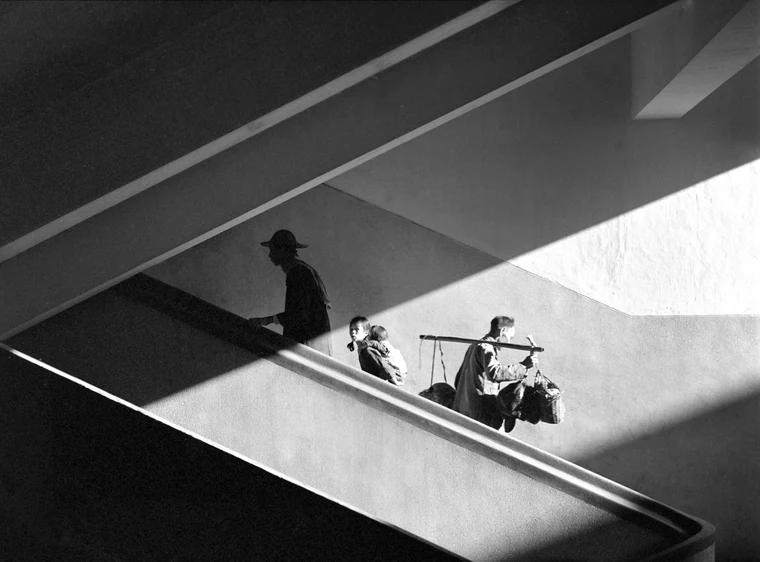
The diagonal does all the work, and you cannot not follow it down through the frame. The shadows repeat alongside it, and a figure waits right where the line is taking you. Pure, deliberate movement.
© David Ward
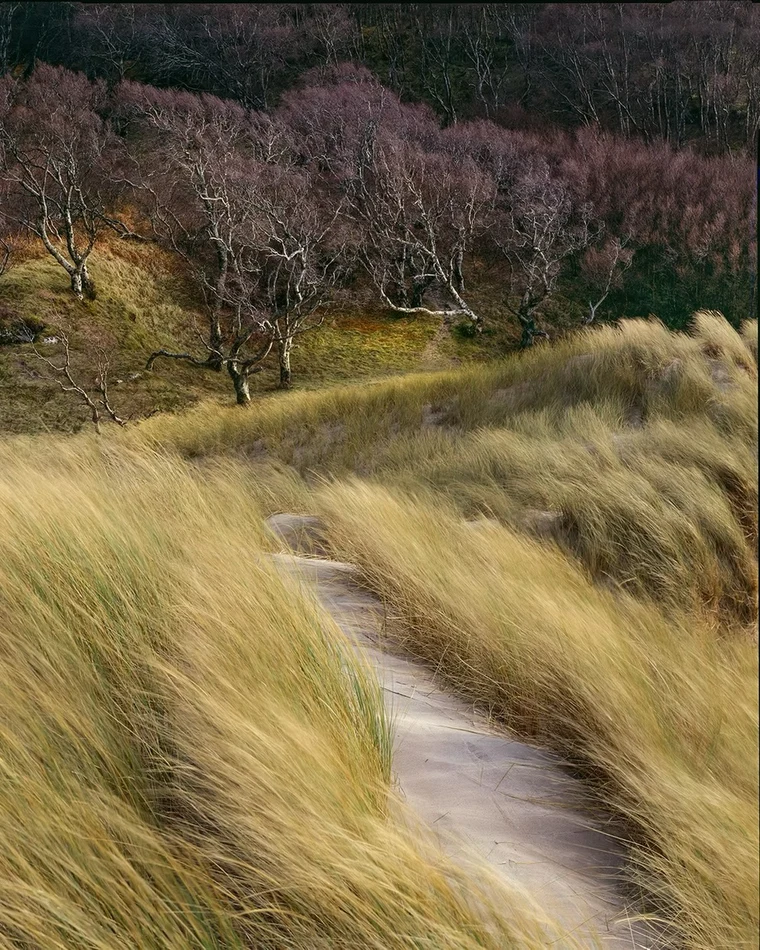
Texture in the foreground, color shifting as it recedes, and a diagonal pulling you back into the warmth. Your eye moves through it in a deliberate order, even if you can't say why. That is the skill, and he's that intentional about it.
© Bill Cone
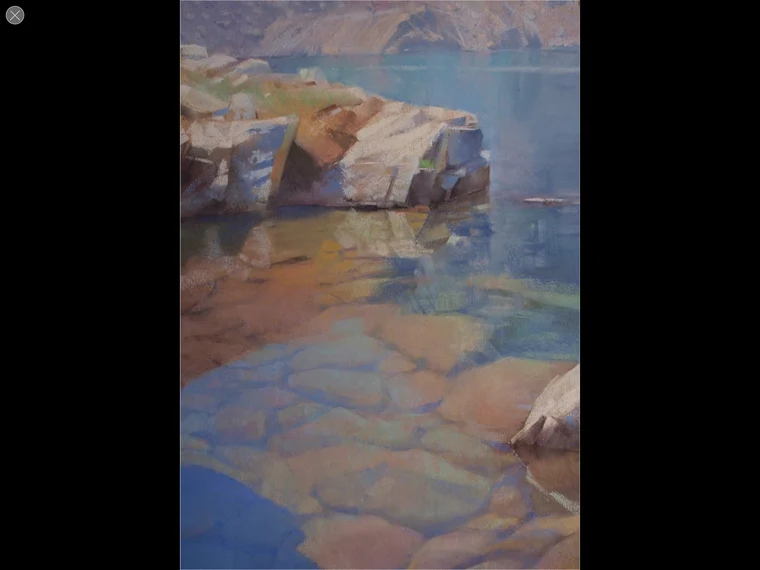
You drop straight down into the cove. The submerged rocks in the shallows, up to the sunlit boulders, then out to the cliffs beyond. The diagonal of stone and the move from shadow into light carry the eye the whole way in and back.
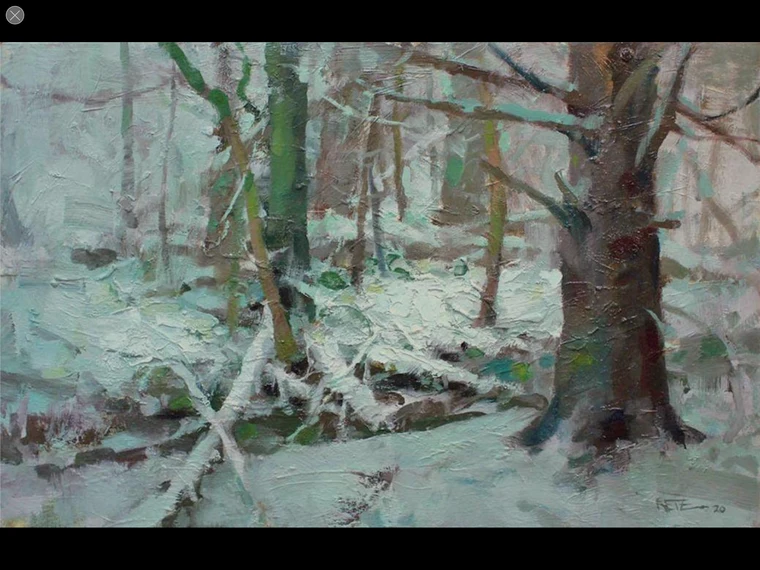
© Tad Retz
The heavy trunk on the right anchors the frame, and the snow-laden branches fall on a diagonal that pulls you across it. The repeated trunks behind keep a quiet rhythm, busy then calm, so the eye drifts through without being pushed.
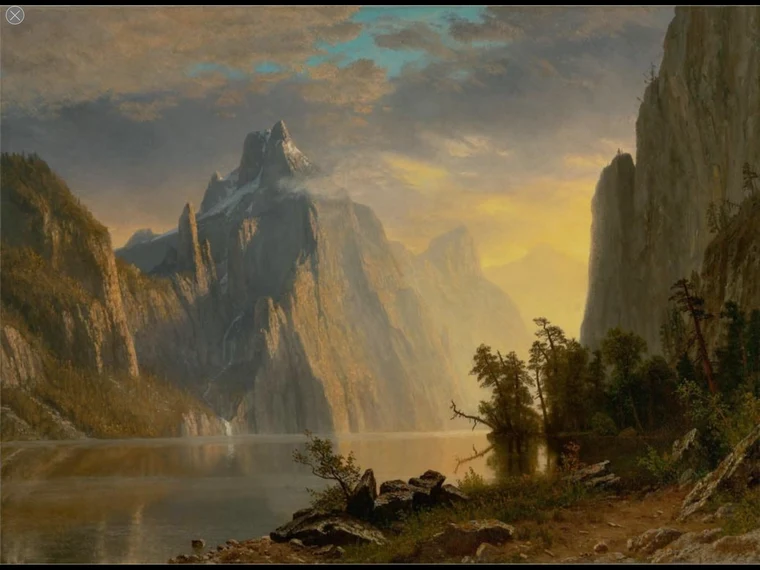
© Albert Bierstadt
He could have run the diagonal straight down to the edge. Instead he suggests it with light and shadow, activates the corners, and lets you travel in and then wander back. Controlled on all four corners, forced on none.
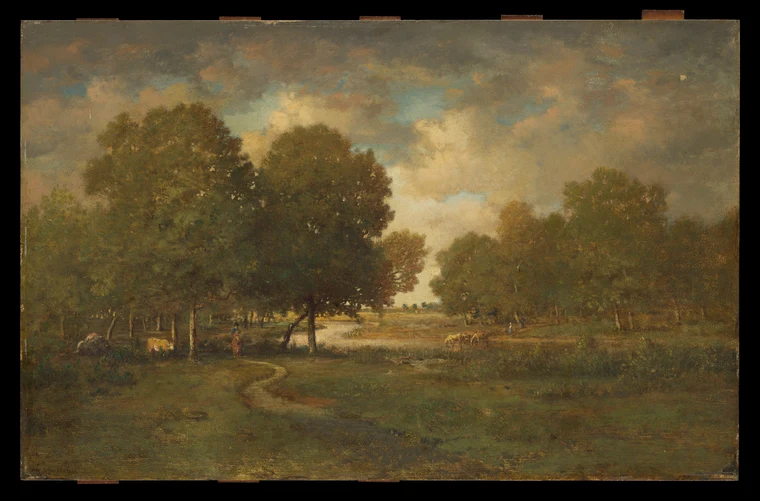
© Theodore Rousseau
An implied diagonal, an S-curve, then another, with the light and contrast pulling you back just as you start to leave the frame. No corner is wasted and nothing is forced. You move exactly the way he wants, and it feels like your own idea.
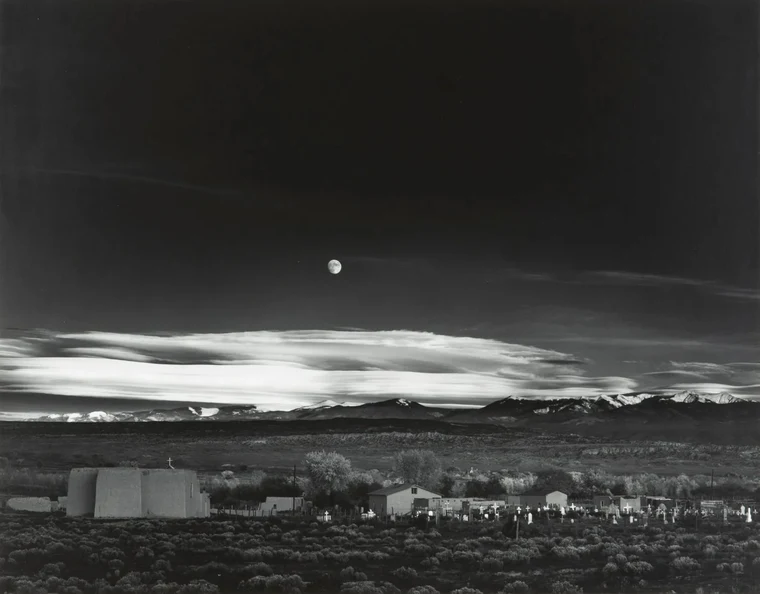
© Ansel Adams
Dark, then a band of luminous highlights, then dark again, then the great expanse where the moon sits. The path is built almost entirely from tone.
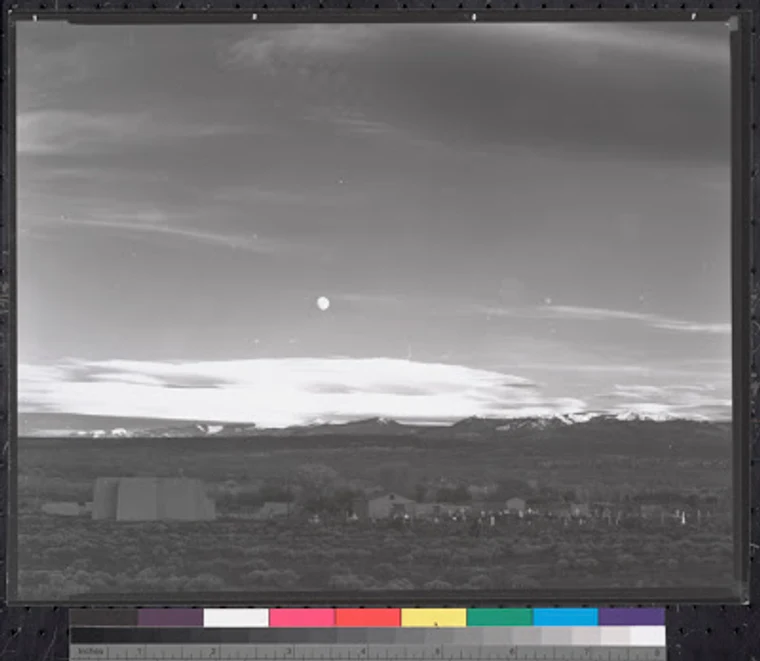
© Ansel Adams
And here is what the negative actually held. He reprocessed the print for years until it matched what he saw, not what the camera recorded. The leading was made in the darkroom as much as in the field.
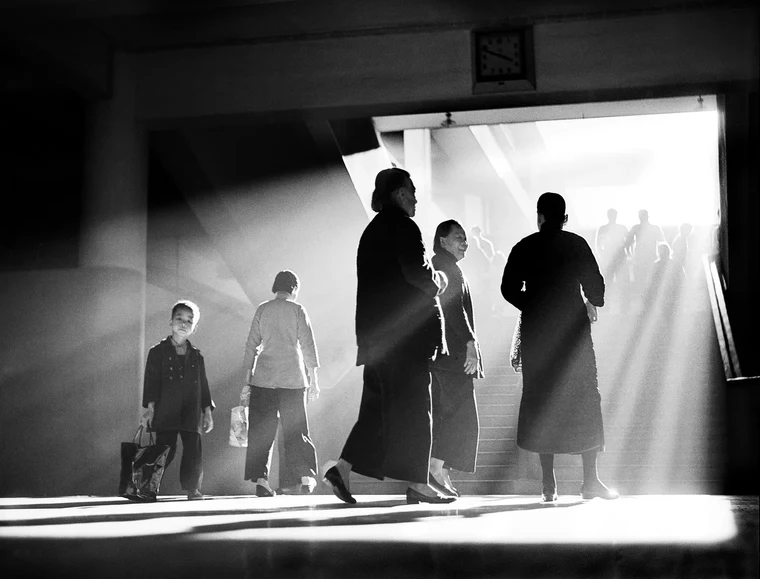
© Fan Ho
Strong backlight, silhouettes, and shadow shapes spaced like a rhythm. The light tells you exactly where to look, and the shadows are what make the light read as light.
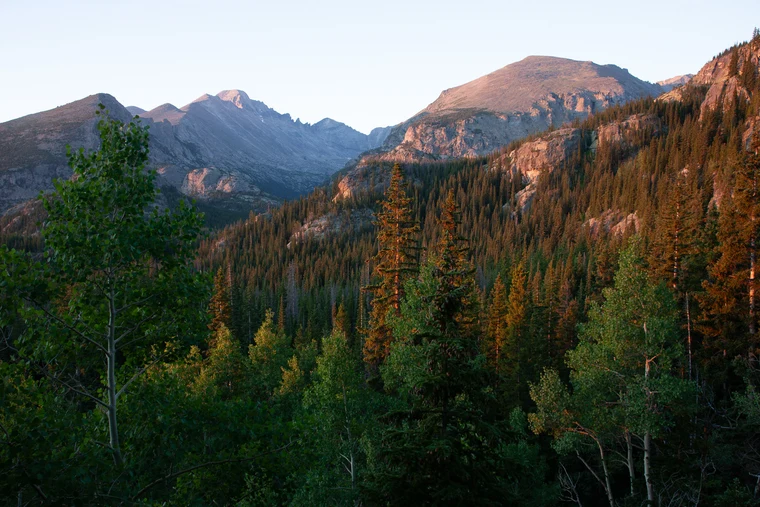
© RRjr
Straight off the card. The warm light in the distance grabs you immediately, and the journey is over before it starts.
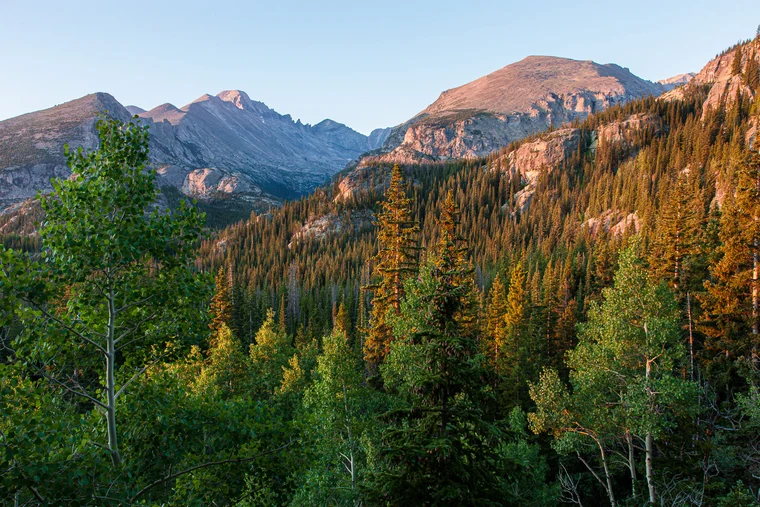
© RRjr
The finished version. I slowed the viewer down, stage by stage, foreground texture into middle ground into the warm light. Same frame, but now there is somewhere to travel.
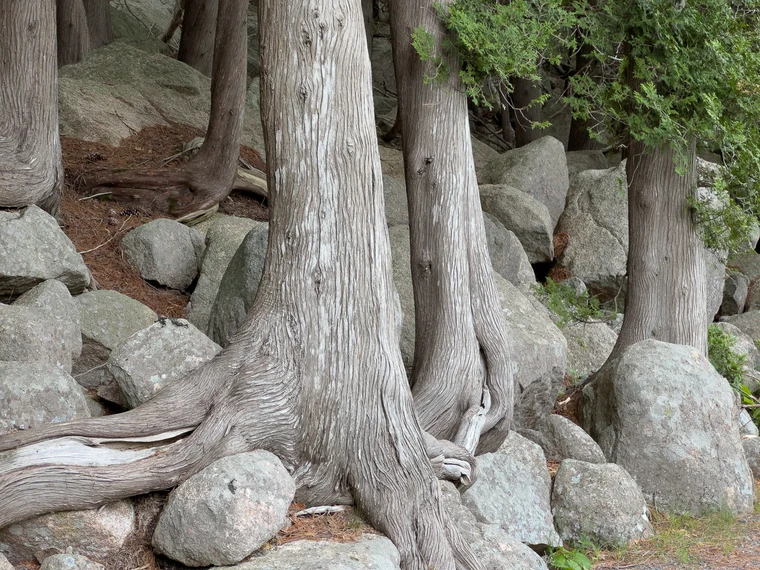
© RRjr
In color the eye wanders. The warm trunks, the boulders, the scrub behind, all asking for attention at once.
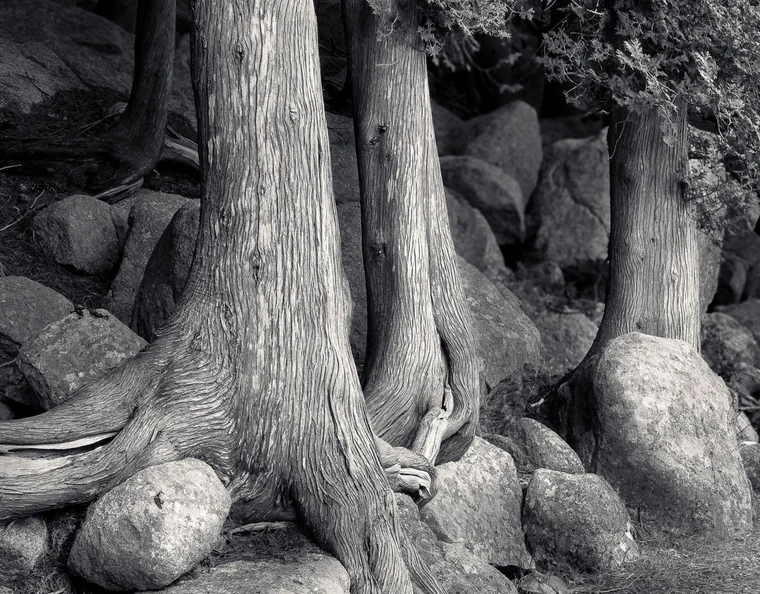
© RRjr
Strip the color and it resolves. The lit trunks read as bright verticals, the boulders drop into dark mass, and the roots become lines pulling the eye down to where the trees grip the rock. Tone alone decides where you look.
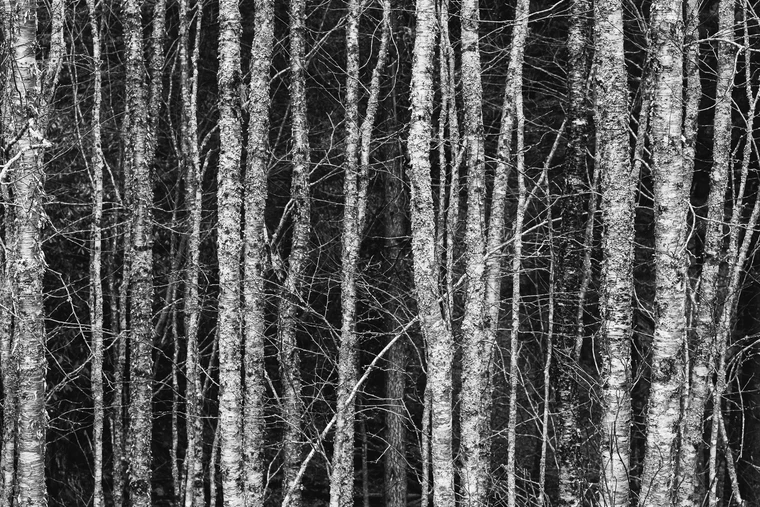
© RRjr
A wall of trees, until you find the groupings. Threes, mostly, with darker gaps to keep the shapes readable. The one diagonal branch sits in the center on purpose. Push it to a corner and it would hijack the calm.
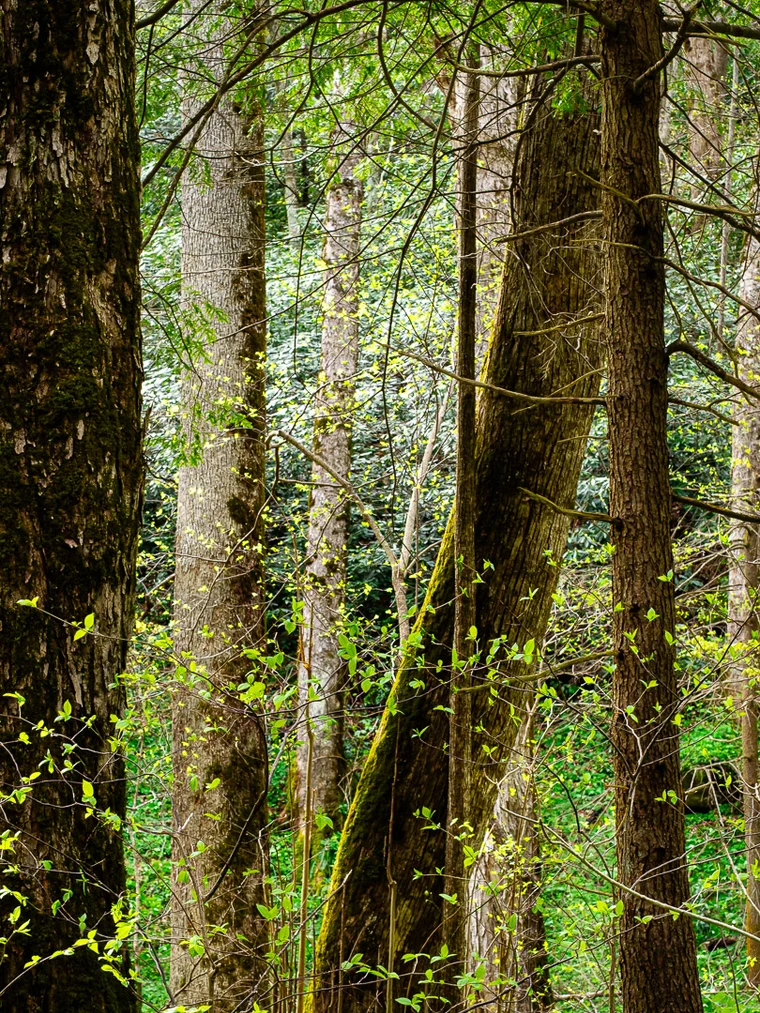
© RRjr
Repetition broken by one tree doing its own thing, then the pattern returns. Darker in front, lighter behind, so the shadows push you in toward the light.
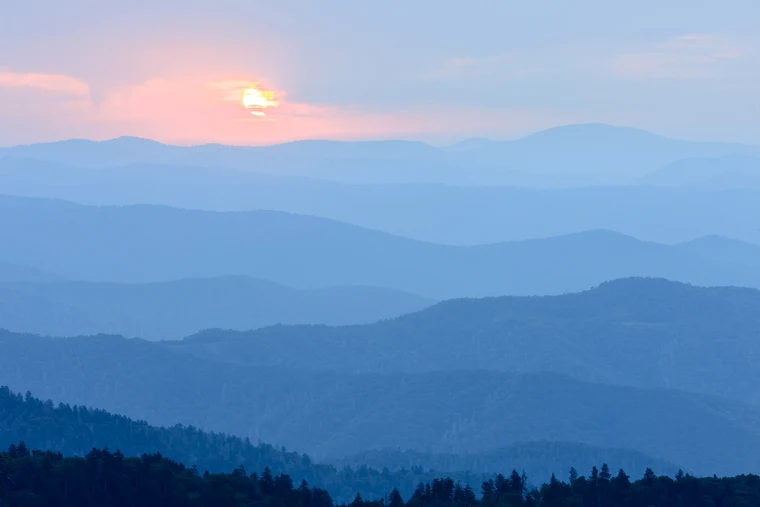
© RRjr
Ridge stacked behind ridge, each one a paler form. The picture is built from the layered shapes and the space between them, not from any single ridge.
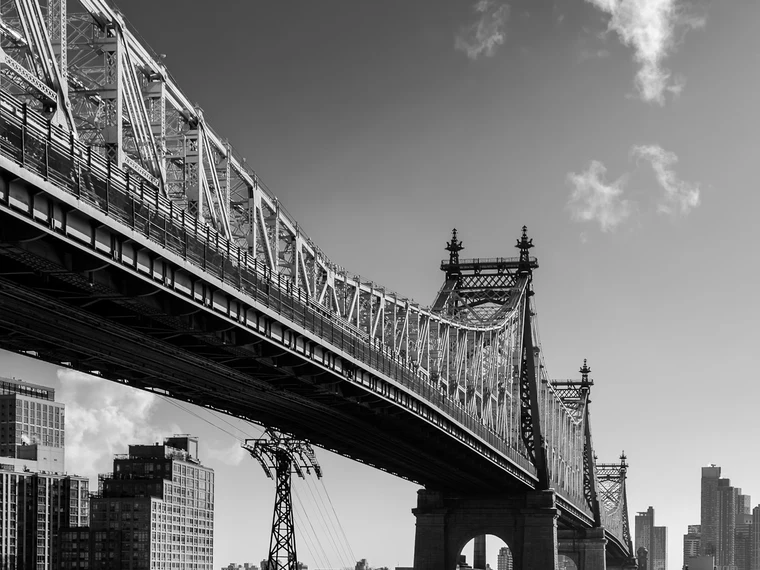
© RRjr
Turrets repeating at smaller intervals as the bridge recedes, so you feel the depth. Rigid geometry below, one soft diffuse cloud above, just enough to answer all that structure without competing with it.
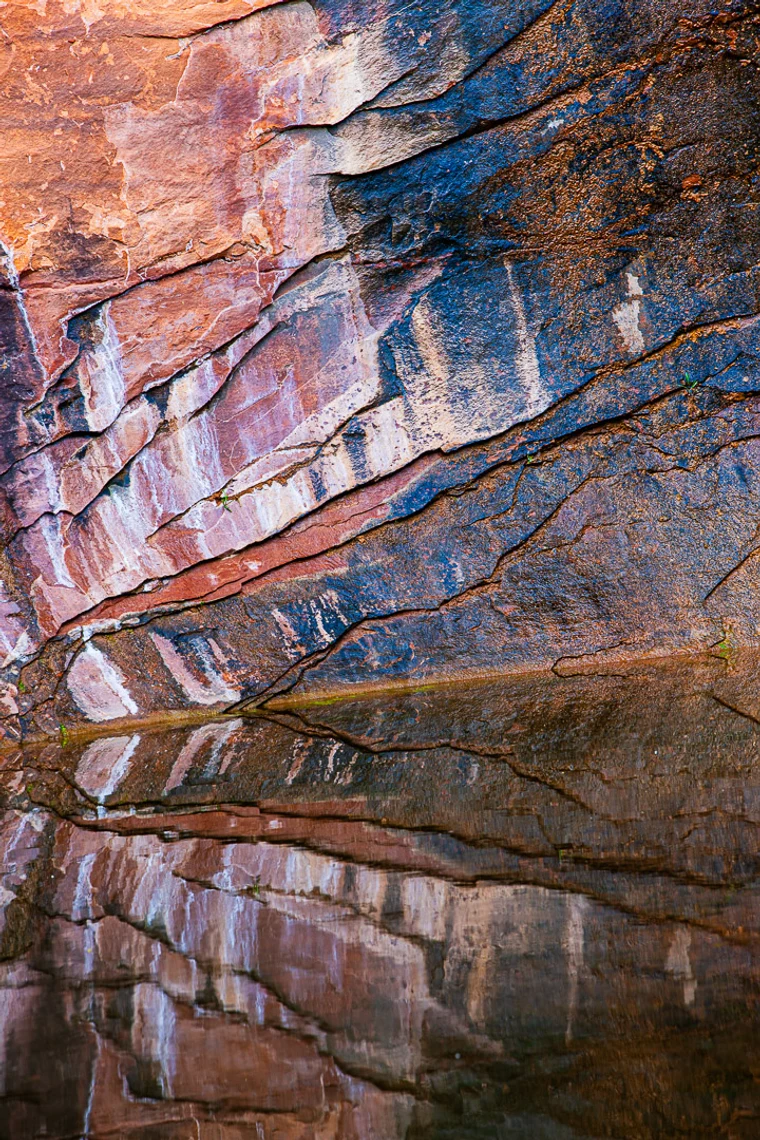
© RRjr
A reflection on very still water, which is why the lines radiate the way they do. They carry the eye out across the bands of rock, each band a different color, texture, and weight. That variation is the whole thing. A pattern that repeats with no change is just monotony.
Years ago I taught myself watercolor. One of the hardest things I have ever done. What stuck with me had almost nothing to do with brushes or paint. It changed my relationship to the frame.
A painter starts with a blank canvas. Every mark is a decision. So I asked myself, if they are that intentional about everything inside the frame, why aren't we? A camera doesn't decide what matters. It captures everything in front of it, all of it equally. Deciding what matters is your job, and you should never hand that job to the camera.
You don't need to learn to paint for any of this. It isn't a technique, it's a mindset. And here is the part I keep returning to. What you give your attention to is what you see more of. The thing you focus on in the field genuinely looks brighter, sharper, more saturated to you. The raw file rarely agrees. Editing is where you put back the attention you actually paid.
None of this ever gets finished. You won't become a master, but you can photograph with mastery, which just means treating every frame as an experiment and every failure as something to stand on. A failure you learned from was never a failure. It is the floor under the next picture.