Book Notes: Art & Fear—Overcoming Creative Fears and Embracing Your Artistic Journey
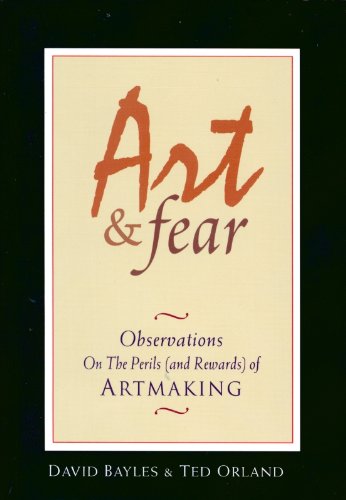
Art & Fear By David Bayles and Ted Orland
“Vision is always ahead of execution, knowledge of materials is your contact with reality, and uncertainty is a virtue.”
We’re all intimately familiar with the fear that comes from trying to make art. By art, I mean the product of our creative efforts — work we hope will resonate with others.
There’s the fear of failure, of ridicule, of sharing our ideas and pictures in a world that often feels indifferent and hostile. David Bayles and Ted Orland confront these fears directly and offer helpful insights in this classic book that has a permanent place on my bookshelf.
I first read Art & Fear soon after embarking on my career as a photographer, and I’ve probably re-read it five times since. Each time, it continues to challenge me to ask important questions about myself and my work. It’s no exaggeration to say this book changed how I thought about my art within the greater context of life.
One of the most profound lessons I took from it was learning to stop comparing myself to others or trying to measure up to external expectations. This shift allowed me to focus more on the process of improving and far less on the results.
“In large measure becoming an artist consists of learning to accept yourself, which makes your work personal, and in following your own voice, which makes your work more distinctive.”
We all need the space to feel confident in our personal vision, especially in a world that so readily encourages conformity. Making art as a career was — and continues to be — extremely challenging, but cultivating that space for myself was one of the most valuable takeaways from this book.
David Bayles reminds us that a change in attitude and perspective can overcome most obstacles, especially those driven by fear. Uncertainty, as they say, is a virtue. It makes each day a new experience and offers us opportunities to create things that are meaningful both to ourselves and to others.
“At any point along that path, your job as an artist is to push craft to its limits — without being trapped by it. The trap is perfection: unless your work continually generates new and unresolved issues, there’s no reason for your next work to be any different from the last.”
This book is more than a guide; it’s a companion for anyone navigating the creative journey. Its wisdom has stayed with me over the years, and I expect it always will.