
Listening to the Light: How Music Helps You to See
In both music and photography, what we feel comes from balance—not just between loud and soft, or bright and dark, but between sound and silence, tension and release.
I’ve been thinking about this a lot lately after sharing two recent images with Academy members during a creative editing session. Some of the questions were challenging (in a great way) and I had to stop and really think about how to explain my compositional decisions.
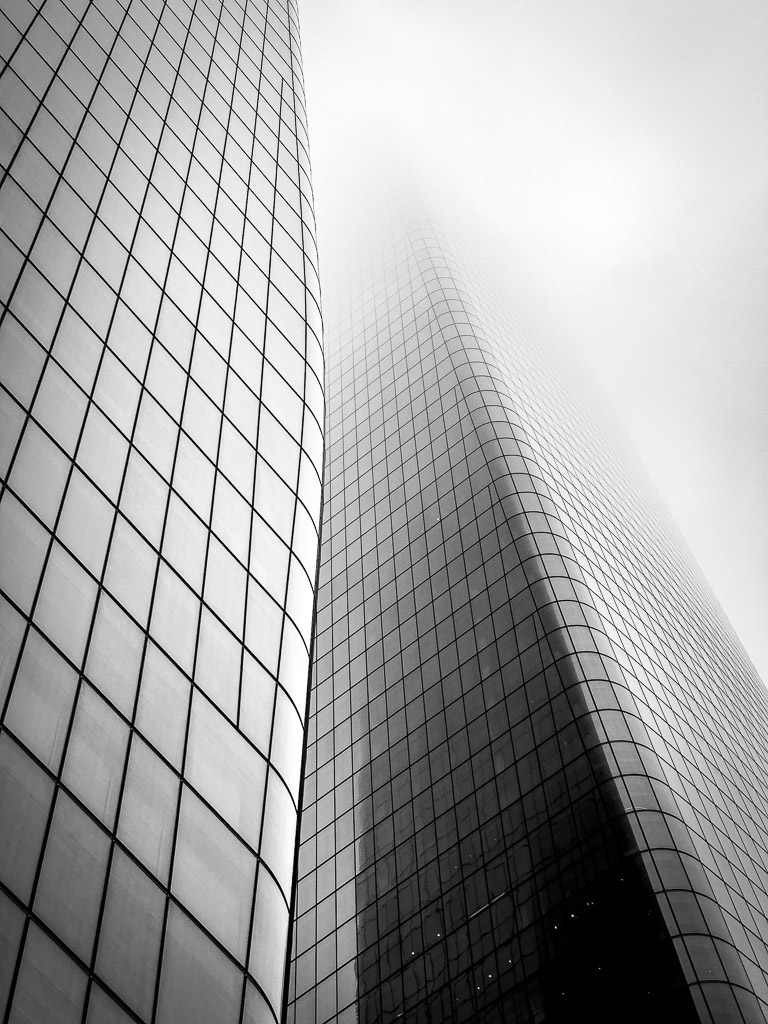
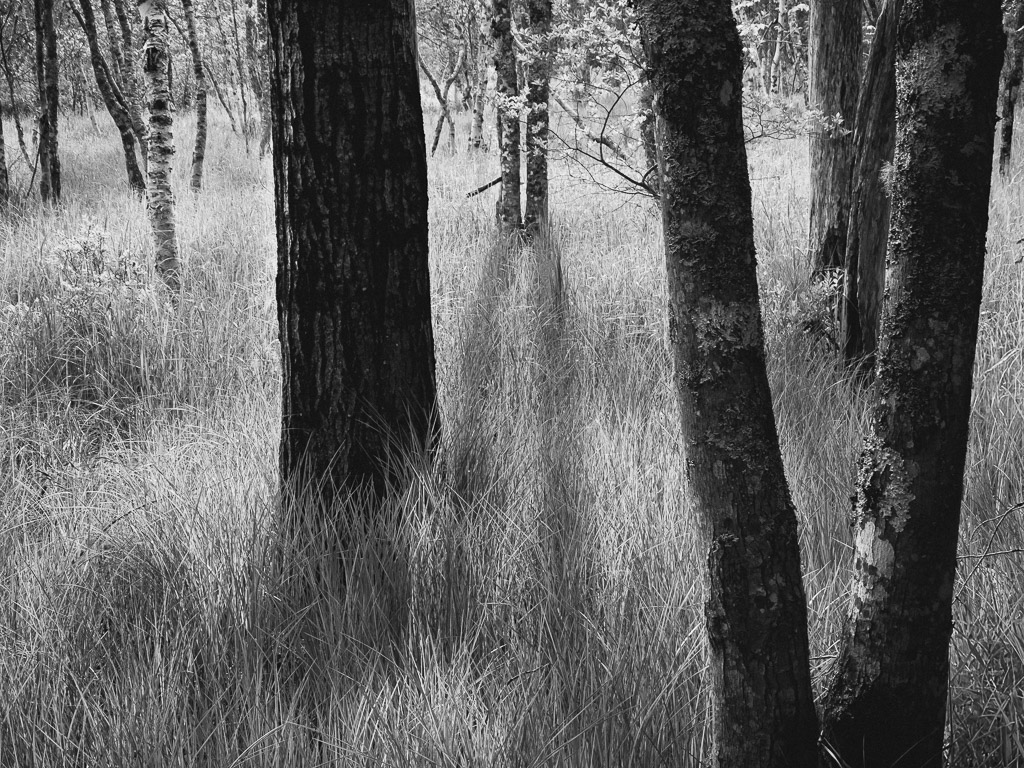
First, these two images made me realize how much light behaves like sound. One was made in a quiet forest in Maine, the other among glass towers disappearing into fog in NYC. Both are studies in tone—one grounded in organic patterns, the other in architectural rhythm.
In the forest image, those darker tree trunks act like the low frequencies in a symphony. They anchor everything, giving the lighter grasses and that backlit air something to resonate against. Without that foundation, the higher tones—the sparkle of light, those subtle textures—wouldn’t feel alive. The darks provide the visual underpinning that gives energy to everything illuminated.
Looking back now, the city image works differently. The repeating windows form this geometric rhythm, but I was really just focused on the larger shapes receding into the fog…the space between the notes.
I was captivated by how the light softens as it rises, dissolving those shapes into atmosphere. That upward tonal transition mirrors a musical crescendo, one that resolves not with volume but with silence.
What I realized was how I was connecting light and shadows to sound, almost like listening rather than seeing. Sensing how light moves through the frame is so critical in any image, and it’s one of the most important skills you can develop.
Don’t approach tone as a static element to correct in Lightroom, but as a dynamic “sound” you discover in the field.
When you’re editing, try this: think in frequencies. Where are your bass (low frequency) notes—the visual weight that grounds your composition? Where are your midtones and highlights? And how do your highlights sparkle without losing their connection to that foundation?
This is one of those things that clicked for me after years of making music before I ever picked up a camera, and definitely made that transition feel seamless and natural. And I love explaining and sharing that connection in my teaching and mentoring.
Photography, like music, isn’t about perfect notes. It’s about resonance—the way light and form create something we feel long after the sound fades.
What are you working on right now that could benefit from this kind of listening?