Why I Outgrow My Own Photos
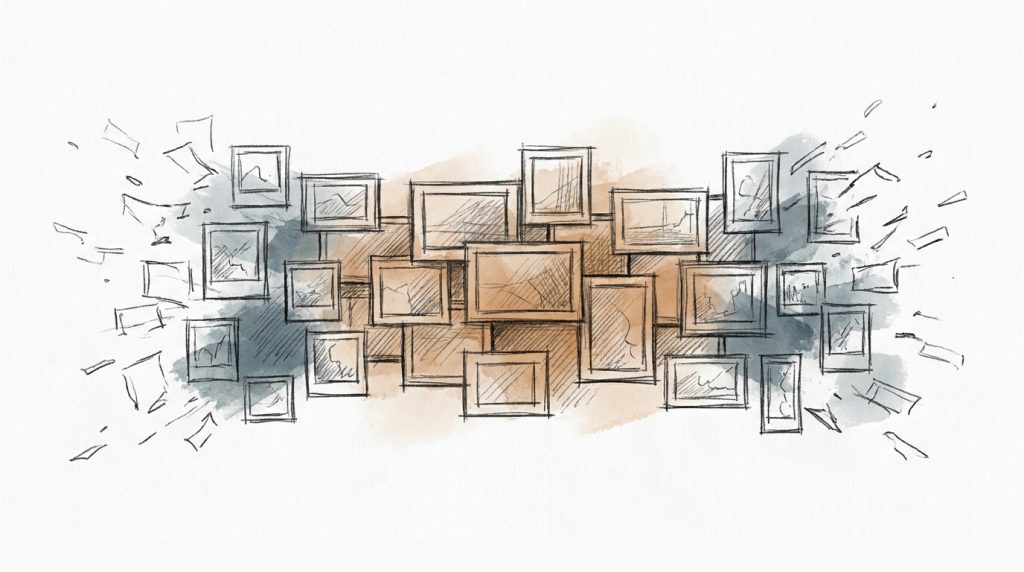
There’s a simple creative practice I do every year that’s helped me understand my own work better than any amount of shooting new images. I review my portfolio and remove 10-15% of the images that no longer measure up to where I am today, then add new work that better represents my current vision.
I truly believe this is one of the most clarifying things you can do as a photographer.
But before I go further, let me clarify something important: I’m not talking about deleting images from my catalog. I rarely do that except for blatant mistakes. The majority are incredibly valuable for learning, and you never know when you’ll revisit an old image with fresh eyes.
Also, your catalog isn’t your portfolio. Your catalog is everything you’ve shot—your complete archive. Your portfolio is what you show the world, the images that represent who you are as a photographer right now.
For me, that’s the work on my website. For you, it might be a personal site, an Instagram gallery, a print folio, or competition entries. Whatever form it takes, your portfolio is the work you’d be proud to sign your name to.
Here’s what I ask myself for every image in that annual review:
“Does this still represent the photographer I am today?”
Not “Is this technically sound?” Not “Did I work hard on this?” Or worse, “Am I comfortable with this?” Just: Does this belong in my current body of work?
An image that felt essential two years ago might not carry the same weight today. And that’s real growth. A weak image that you’re comfortable with is still a weak image.
As I remove images that no longer fit and add new ones, patterns emerge. The images that stay share something in common. Not the subject, and not the technical polish I was once so proud of, but how I saw the scene. The composition, the mood, what the picture is actually trying to say. That’s what carries an image forward, and it’s the part that keeps getting stronger.
The ones that get removed are usually the ones where I was playing it safe, well inside my comfort zone. But if you can manage to be honest with yourself, your portfolio becomes more coherent, more distinctly yours.
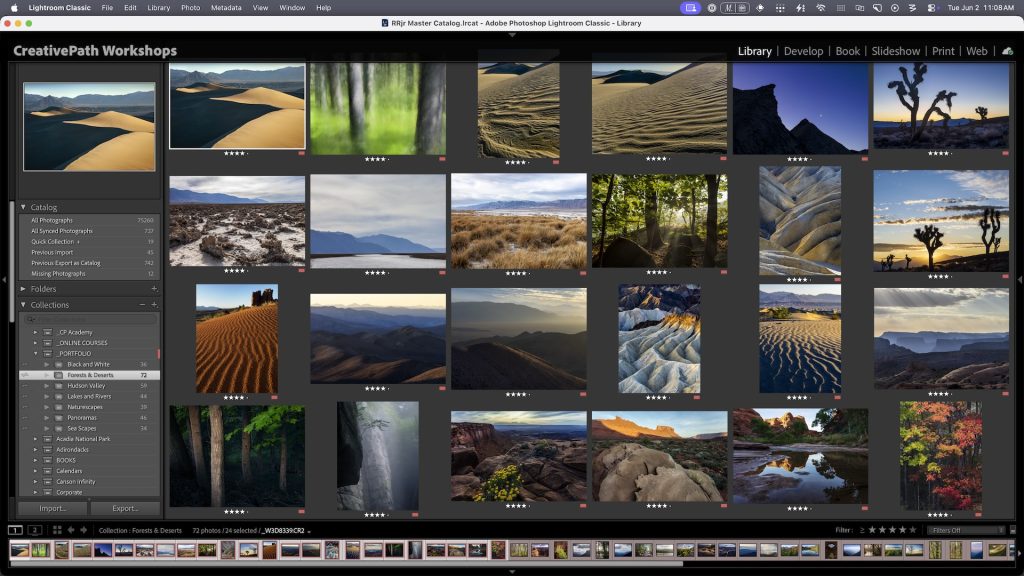
You don’t need to wait for January or some arbitrary milestone. The best time to do this is when you feel ready to see your work more clearly. For me, it’s become an annual practice, but you might do it whenever your portfolio starts feeling disconnected from who you are as a photographer right now.
It’s uncomfortable acknowledging that yesterday’s portfolio-worthy work doesn’t meet today’s standards. But that discomfort means you’re growing.
Clarity doesn’t come from showing everything. It comes from knowing what deserves to be shown.