
Finding the Essence in Your Photograph
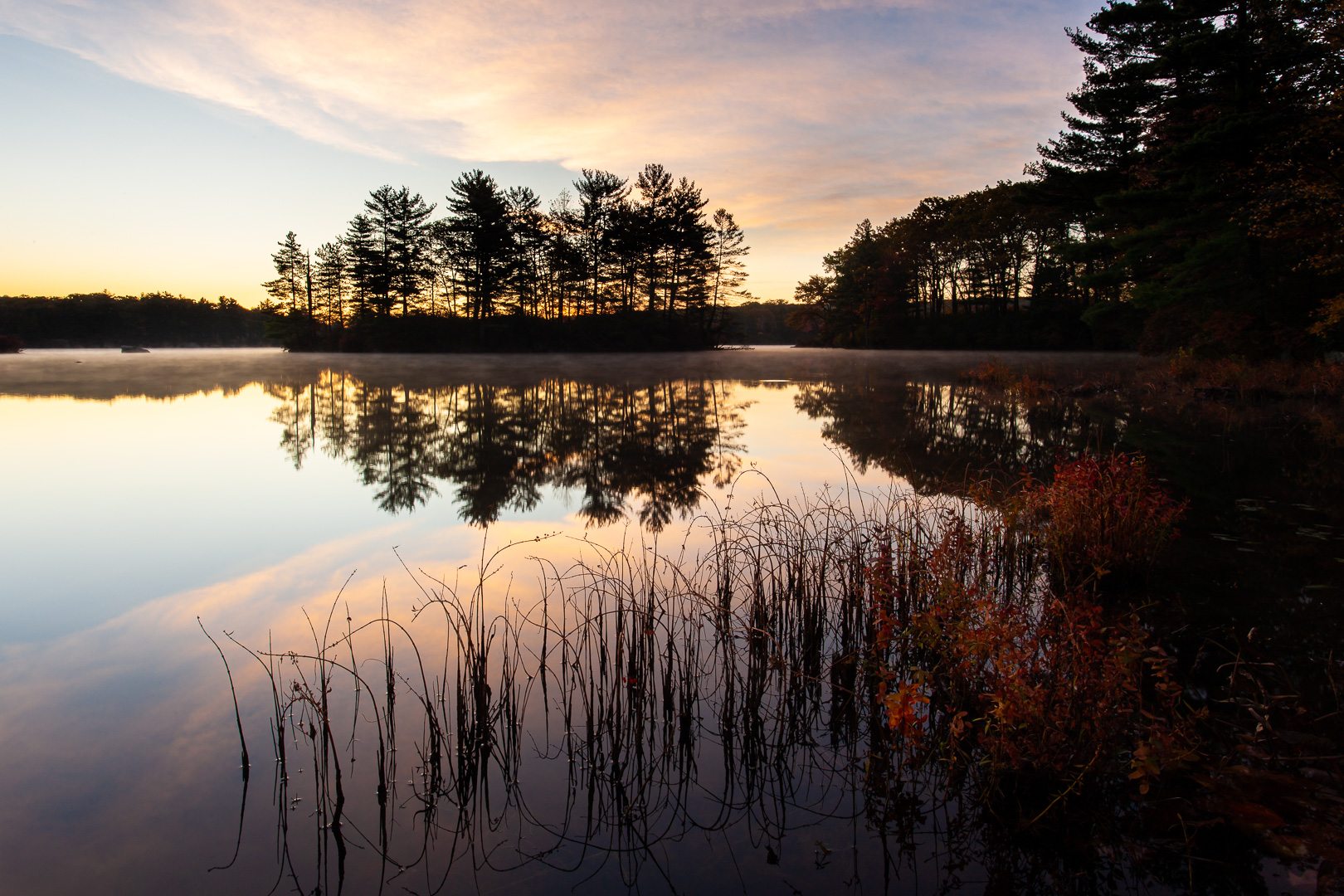
I’m sure you’re familiar with the feeling of walking into a beautiful scene that stops you in your tracks. You consider the various compositional options, you raise the camera, and suddenly it’s busier than you first imagined. There are too many highlights on the left, a tree blocking the better tree, a foreground that was so much quieter when you were just looking with your eyes. By the time you press the shutter, the image is everything you saw at once, which is exactly the problem.
The hardest skill in photography isn’t seeing more, it’s choosing less. Strong photographs come from clarity of intent, not from richness of content, and the challenge is to capture what made you stop in the first place. Everything else, no matter how beautiful, weakens the composition, often without you even noticing at first.
This is because our brains can play tricks on us, filtering out the things that aren’t really important, and emphasizing those things we’re really curious about. Marisa Carrasco’s lab at NYU has shown that attention literally changes how things look—what we focus on appears higher in contrast, slightly larger, and even more saturated than the rest of the frame.
Think about that for a moment. Then consider that a camera does not apply this same filtering. It captures everything equally, which means any flaws in your composition become magnified to the viewer, who isn’t seeing the scene with your particular point of view.
I came to this realization after many years of wondering why my images didn’t convey what I wanted to express about my experiences. They focused too much on what was “out there” instead of what was inside. Photography, like any art, is improvisation—you play a note, listen for what happened, then play the next. What really matters is what happens in the space between the notes.
The principles below are how I make those decisions in the field. None of them are new or exotic, but they provide a structure that helps me decide what happens between presses of the shutter button.
Name the subject in one sentence
Before you press the shutter button, finish this sentence: this image is about __. If you cannot fill the blank in seven or eight words, the frame will not hold together later, no matter how well you handle the technique. A vague intention always produces a vague photograph.
Find the dominant shape
Most scenes that feel cluttered are carrying one large structure underneath, a curve of light, a triangle of trees, the line where the water meets the rock. Find that shape and make sure the rest of the frame supports it.
Frame tighter than you think you need to
Almost always, your first instinct for how much to include in the frame is too generous—I know this from lots of experience. If something is in the frame and you cannot tell yourself why, it is competition. Get rid of it, even if it’s beautiful, especially if it’s beautiful.
Treat every edge as an instruction
Sharp focus and detail say, look here. Soft focus says, this is less important. Strong contrast at an edge brings something forward, low contrast lets something recede. There is no neutral edge in a photograph, either it’s working for the story you are telling, or it’s whispering something else.
Let the light pick the subject
The light decides what is worth looking at long before the photographer does. When the light is right, simplifying feels obvious. When the light isn’t ideal for the picture you want to make, no amount of careful framing will save it. You are usually trying to make composition do the work the light should have been doing.
Decide in the field, not in editing
Composition, light, and the relationships at the edges of the frame are decisions made at the moment of capture. A thirty-second framing decision will save you three hours of post-processing every time, and the resulting image will be significantly stronger.
What this gives you
When you work this way you stop reacting to scenes and start interpreting them. From the outside it can look effortless, the way a confident musician’s playing looks effortless. But it’s not, it’s deliberate structure underneath, applied so naturally that you stop noticing it’s there.
That structure is what most people are pointing at when they talk about the compositional eye. It’s the most influential part of the entire system, and unlike your camera bag, it’s the one piece you should never stop investing in.
If this sounds like the conversation you have been wanting to have about your own work, it is the work we do inside the Academy week after week. For now, just try the first principle on your next outing. Before you press the shutter, name the subject out loud. The picture you make after that will not look like the one you were about to make, and almost every time, it will be the one worth keeping.
Your reference to the essence of photography is quite coherent and consistent, drawing on your experience and study of the subject. I like the metaphor regarding musical notes: sharps and flats.
I really appreciate your advice and your approach to photography, Professor Rodriguez. Thank you very much.
Thanks, appreciate the feedback!
Art is aesthetics; it is the sensitivity to objective beauty and subjective beauty.
Objective beauty is what one, as a photographer, sees when taking the photograph.
Subjective beauty is what the viewer of the photograph perceives, and it is shaped by external stimuli experienced from the womb right up to the present moment.
Hey Federico, I agree with you, but I’d also add that the photographer experiences subjective emotion from beauty. And that’s what I think should be expressed in his photography. This is why different photographers can photograph the same subject and capture different visual stories. Thanks again for sharing your thoughts.
Your comment is awaiting moderation.
Professor Roberto Rodríguez Jr. I really like the analogy you draw between photography and music. All your ideas have been invaluable to me. You are the only person who has convinced me of your approach to teaching photography.
I also recall the ideas of figures such as Carl Jung, Theodulus Monk, Albert Einstein and others regarding the art of photography. I took up photography at the age of 50, and retirement has given me the time to learn about the art of photography. I live in Mexico City.
Welcome Federico, thanks so much for the feedback, really appreciate it! And yes, great names you mentioned there, which I have been influenced by as well, particularly Monk and other jazz artists since music was my first career. Would love to visit Mexico City in the future!