
The Camera Sees Less Than You Do
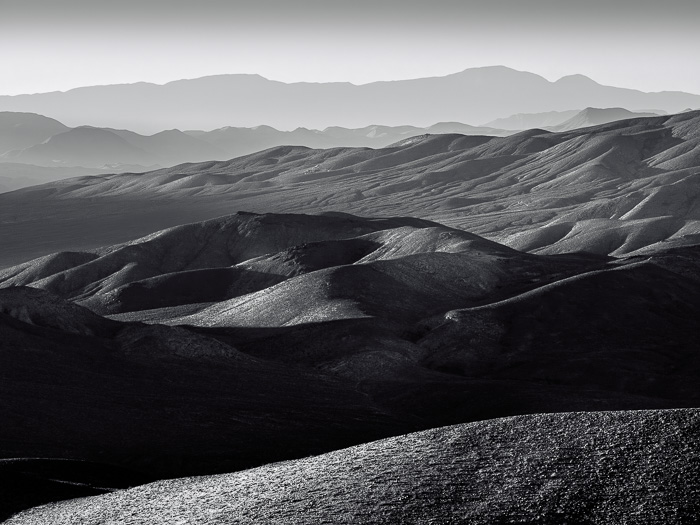
Have you ever stood somewhere with the light looking incredible, made the photograph you thought was successful, then looked at the file later and found it lacking, nothing like what made you stop and press the shutter?
What I’ve learned after many years of this is that the problem comes down to perception and composition. It’s the difference between how you see and how the camera sees, and what you keep in the frame versus what you leave out. Dealing with those two things is most of what photography actually is.
Your eyes and your brain are doing something remarkable in that moment, and you don’t even notice it. They simplify, they pick out what matters and quietly ignore what doesn’t. They also bring feeling into it, so the part you care about looks brighter and sharper to you than everything around it. You’re not really recording the scene when you look at it, your brain is processing it, deciding what matters, and filtering out the rest.
The camera does the opposite. The landscape painter John Carlson said it better than I can: “The camera does not have an idea about the objects reflected upon its lens. It does not feel anything, and will render one thing as well as another.” Your brain simplifies, but the camera records everything equally, with no idea what you found meaningful. It’s a wonderful recording device, and it feels nothing about what it records.
Once you understand that, a lot of frustration starts to make sense. The reason the photograph disappoints you is that the camera recorded everything equally, whereas your eye decided what was most important.
This is where composition does its real work. What you put in the frame versus what you leave out is what determines the emotional content of the image. And the light has to work within the tonal values captured inside the frame, not the whole scene, because your brain is already calibrating for the whole scene and adapting to it without you even noticing.
Here’s an example that surprised me for years. I’ll be out in soft early light, and part of me wants to wait for it to get stronger and more dramatic, because that’s what looks dramatic to my eye in the moment. But often, when I make the photograph in that softer light and compare it later, the softer frame is the one that has the drama. What looked dramatic to my eye was simply too much for the camera. The keeper is usually the frame where I thought the light wasn’t dramatic enough.
This is also why so much of editing isn’t manipulation, it’s restoration and interpretation. When you dodge and burn, or when you rebuild the separation between tones the camera flattened, you aren’t faking anything. You’re putting back the emphasis your eye saw and the sensor didn’t. The camera won’t add emotion for you, or decide what matters most in the frame. That part is always your job, the edit is just where you finish what you started seeing in the field.
Now you may think that a camera can capture more than our eyes can, such as the movement of water in a long exposure, or other long exposure effects at night. And while that’s true, that isn’t the type of seeing I’m talking about, especially since perception and composition still matter as much as they do in any other image.
So if your images have been letting you down, it’s worth learning to notice the difference between what you see and what the camera sees. Stand in front of a scene and ask, not “how do I capture this,” but “what am I actually responding to here, and will the camera get it the way I do?” Usually it won’t, not on its own. Knowing that ahead of time is most of the skill.
The camera sees less than you do. That sounds like a problem, and at first it is. But it’s also what makes photography fun and interesting. If the camera caught everything you saw and felt, there’d be nothing left for you to add. Learning to close that difference, in the field and in the edit, is what separates a mediocre image from one that resonates with viewers.
Learning to see what the camera can’t is most of what we work on together inside Creative Path Academy. Every month I sit with members’ images and we look at exactly this gap, what you were responding to, what the camera actually recorded, and what it takes to close the distance between them. You can read about that difference all day, but it only becomes yours by watching it happen in your own pictures.
If that’s the growth you’re after, come join us. Your first month is the cheapest way to find out if this is how you want to see. Start here →