
Your Camera Documents—You Interpret
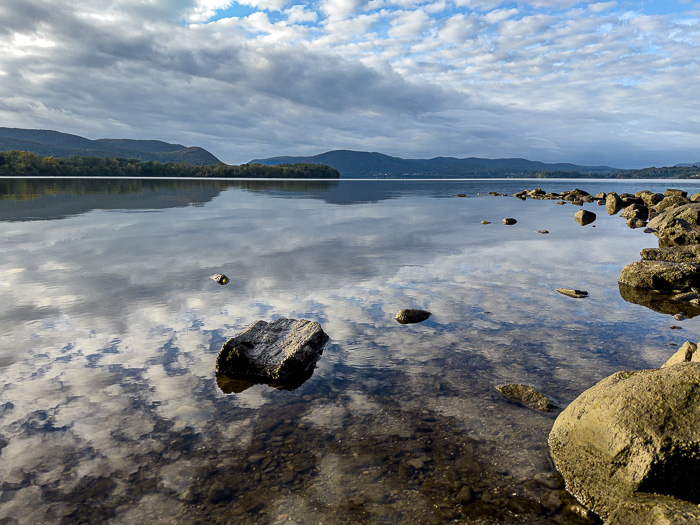
I spent my first few years as a photographer trying to capture what was in front of me. Point the camera at the waterfall, get the exposure right, make sure it’s sharp. If everything was technically sound, I’d consider it a success.
But those images felt hollow. Accurate, maybe, but not what I really wanted—and certainly didn’t look like the images I admired from great photographers.
The shift towards making images that did start to feel right happened gradually. I remember once photographing a stand of birch trees in late afternoon light, and instead of thinking about how to capture the scene, I found myself asking different questions: How is the light moving through these trees? What’s the relationship between the bright bark and the dark spaces behind? Where does my eye want to go, and why?
I wasn’t trying to record the trees anymore. I was trying to understand how to capture the light and the experience.
That’s the difference between documenting and interpreting. And it’s the difference between making photographs and making images that feel alive.
When you interpret rather than just document, you’re asking how things work, not just what they look like. You’re paying attention to relationships, to gesture, to the quality of light and how it reveals form. You’re working from within—from what you feel and notice—rather than from some external idea of what a “good landscape photo” should look like.
Here’s what that looks like in practice:
When I’m photographing water now, I’m not just documenting water. I’m feeling the rhythm in the movement. Watching how current creates patterns. Noticing where light penetrates the surface and where it reflects. The question isn’t “How do I capture this?” It’s “What’s actually happening here, and what does it mean to me?”
With trees, I’m looking for gesture—the lean, the reach, the way branches create patterns against sky. I’m noticing where light filters through leaves versus where it strikes bark. I’m seeing structure and character, not just botanical detail.
The sky isn’t just blue or cloudy. It has character. Movement or stillness. Layers of depth. Even on the calmest days, there’s something happening up there if you pay attention.
And light itself becomes the subject. Where’s it coming from? What’s the quality—hard, soft, diffused? How is it revealing form? Where are the transitions from light to shadow, and what’s happening in those transitions?
This kind of seeing is slower. More deliberate. When I’m working this way, I’m not firing off frames. I’m standing there, sometimes for a long time, just watching. Noticing. Feeling what’s in front of me before I ever raise the camera.
It felt strange at first. Inefficient, even. I was used to moving quickly, covering ground, collecting images. But this approach changed everything. Because when you interpret rather than simply document, you stop making photographs that could have been made by anyone. You start making photographs that could only have been made by you.
The camera documents what’s there. Your job is to interpret it.